
• About
    • About ICCE
    • Community
    • Timeline
    • ICCE Board of Directors
    • ICCE Team
    • Technical Advisory Committee
    • Strategic Plan
    • Activities
    • Cumulative Effects
  • Resources
    • Directory of Practitioners & Projects
    • Cumulative Effects Knowledge Centre
    • Initiatives
      • The Confederacy of Mainland Mi’kmaq
      • Pekuakamiulnuatsh Takuhikan
      • Northwest Territories Cumulative Impact Monitoring Program
      • Metlakatla Cumulative Effects Management Program
      • McMurray Métis Research Projects
      • Nunavut Impact Review Board
    • Video Gallery
  • News
  • Events
    • Calendar of Events
    • Conference
      • 2025 ICCE Conference
      • 2023 ICCE Conference
      • 2022 ICCE Conference
      • 2021 ICCE Conference
      • 2020 ICCE Conference
  • Jobs
  • English
    • Français (French)
Contact us
  • About
    • About ICCE
    • Community
    • Timeline
    • ICCE Board of Directors
    • ICCE Team
    • Technical Advisory Committee
    • Strategic Plan
    • Activities
    • Cumulative Effects
  • Resources
    • Directory of Practitioners & Projects
    • Cumulative Effects Knowledge Centre
    • Initiatives
      • The Confederacy of Mainland Mi’kmaq
      • Pekuakamiulnuatsh Takuhikan
      • Northwest Territories Cumulative Impact Monitoring Program
      • Metlakatla Cumulative Effects Management Program
      • McMurray Métis Research Projects
      • Nunavut Impact Review Board
    • Video Gallery
  • News
  • Events
    • Calendar of Events
    • Conference
      • 2025 ICCE Conference
      • 2023 ICCE Conference
      • 2022 ICCE Conference
      • 2021 ICCE Conference
      • 2020 ICCE Conference
  • Jobs
  • English
    • Français (French)
Contact us
  • About
    • About ICCE
    • Community
    • Timeline
    • ICCE Board of Directors
    • ICCE Team
    • Technical Advisory Committee
    • Strategic Plan
    • Activities
    • Cumulative Effects
  • Resources
    • Directory of Practitioners & Projects
    • Cumulative Effects Knowledge Centre
    • Initiatives
      • The Confederacy of Mainland Mi’kmaq
      • Pekuakamiulnuatsh Takuhikan
      • Northwest Territories Cumulative Impact Monitoring Program
      • Metlakatla Cumulative Effects Management Program
      • McMurray Métis Research Projects
      • Nunavut Impact Review Board
    • Video Gallery
  • News
  • Events
    • Calendar of Events
    • Conference
      • 2025 ICCE Conference
      • 2023 ICCE Conference
      • 2022 ICCE Conference
      • 2021 ICCE Conference
      • 2020 ICCE Conference
  • Jobs
  • English
    • Français (French)
  • About
    • About ICCE
    • Community
    • Timeline
    • ICCE Board of Directors
    • ICCE Team
    • Technical Advisory Committee
    • Strategic Plan
    • Activities
    • Cumulative Effects
  • Resources
    • Directory of Practitioners & Projects
    • Cumulative Effects Knowledge Centre
    • Initiatives
      • The Confederacy of Mainland Mi’kmaq
      • Pekuakamiulnuatsh Takuhikan
      • Northwest Territories Cumulative Impact Monitoring Program
      • Metlakatla Cumulative Effects Management Program
      • McMurray Métis Research Projects
      • Nunavut Impact Review Board
    • Video Gallery
  • News
  • Events
    • Calendar of Events
    • Conference
      • 2025 ICCE Conference
      • 2023 ICCE Conference
      • 2022 ICCE Conference
      • 2021 ICCE Conference
      • 2020 ICCE Conference
  • Jobs
  • English
    • Français (French)
Contact us
How Cumulative Effects Impact the North
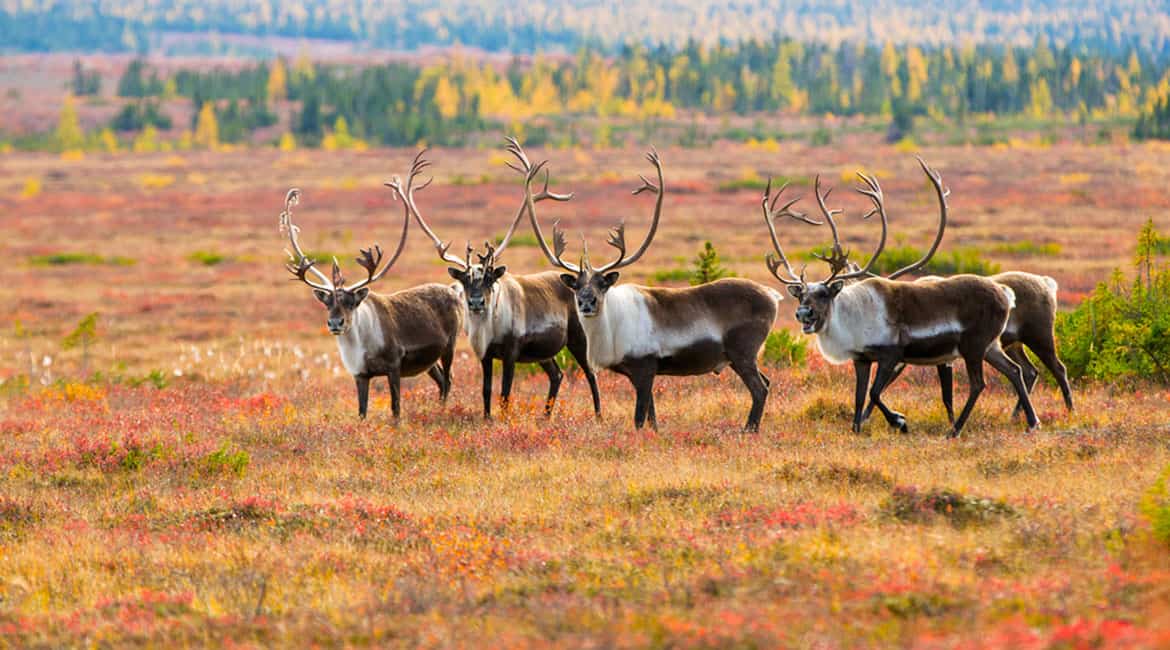
photo of caribou in an autumn field
Betty Biesenthal

How Cumulative Effects Impact the North

Every ecosystem is special, beautiful and fragile in their own way. From the eastern and western coastal climates, to the lush abundance of great plains, to the remarkably rugged shorelines of the Great Lakes region – there is so much to celebrate and appreciate. We are also reminded that there is so much to protect.

Those who live in more temperate climates in the south have experienced significant growth and industrial development that has had generational impacts on the environment, the people, and the activities of local First Nations and Métis. In the north, the ecosystem is now vulnerable from the effects of climate change and human impacts, while the landscape has remained relatively untouched and has flourished for millennia. Inuit, in particular, have a vested interest in understanding and playing a role in addressing cumulative effects. 

Cumulative effects are the changes caused by multiple interactions among human activities and natural processes over time. Cumulative effects have an impact on the ecosystem, the flora and fauna, as well as health, culture and traditional land use of Indigenous peoples.

For Inuit, cumulative effects may have a lasting impact for generations. As growth, resource development and industrial land use come to the north, it is important to consider how Inuit can better assess, manage and monitor cumulative effects on the local and regional ecosystem.

The following is a list of how cumulative effects could impact the north:

1. Land Uses That Have a Permanent Impact

While there are substantial economic benefits from growth, new jobs and resource development, there are also cumulative effects. Increasing populations means further expansion of residential areas and community infrastructure. More people means more waste. More people also means the need for more transportation both over the land, in water and through the air.

Mining and exploration, for example, are far too often seen as temporary. In reality, long after exploration activities cease and mines are closed, they continue to have a lasting impact on the environment. Buildings and infrastructure and pollutants have great impacts on the landscape, the permafrost, and the wildlife.
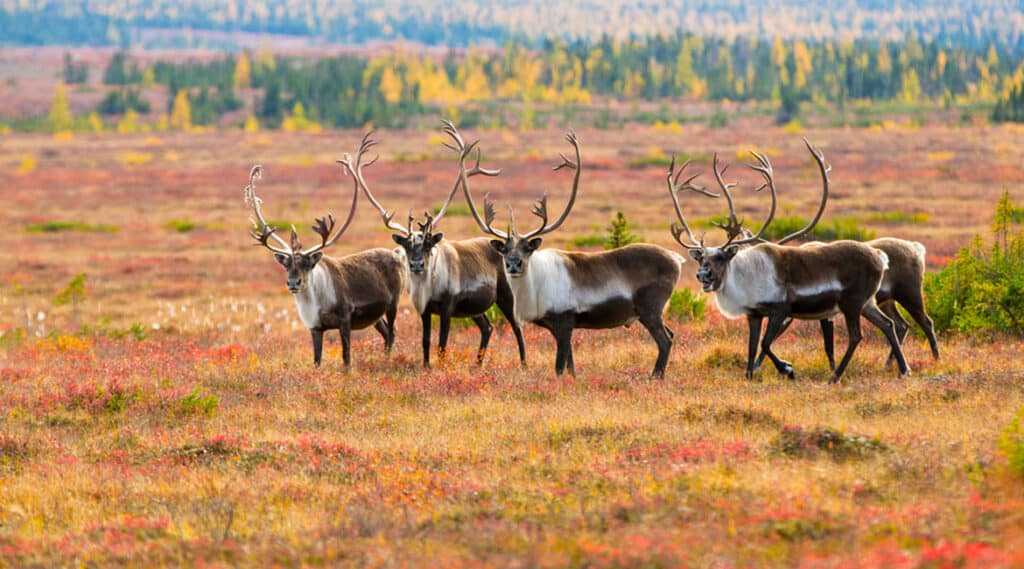
photo of caribou in an autumn field
2. Environment, Wildlife, Bird and Marine Mammals

Cumulative effects can be found throughout the food chain. Toxic substances may be absorbed by terrestrial wildlife, birds, marine mammals, through a process of bioaccumulation, and interfere with basic biological functions such as reproduction. Inevitably, this may result in fewer animals, more challenging harvests and country foods that may no longer be safe. Certain land uses may drive away and alter migration patterns of herd animals and birdlife.

3. Traditional Land Use and Well-Being

The greatest concern of cumulative effects lies with its impacts to Indigenous peoples and traditional land use. This is an important part of Inuit culture and ways of life. Expansion of resource development and industrial land use have far-reaching impacts to those who use the land regularly as a means of survival and sustenance.

Indigenous peoples may not be able to use lands and resources or practice traditions that are proximate to development. For Inuit who continue to live off the land, these impacts can be a risk to the well-being of families.

As we have seen recently in Iqaluit, even the city water sources and distribution system can be greatly impacted by pollutants. A spill of hydrocarbons into fresh water, through a fueling accident or improper storage, can result in great harm to the environment and community health.

SHARE TO SOCIAL MEDIA

104-360 College Street
Toronto ON M5T 1S6

Local Call:
819-410-0580

Toll-Free Call:
1-800-823-2456

Contact Us

QUICK LINKS

About Us

Timeline

Community

Initiatives

Legal

Privacy Statement

Disclosure / Imprint

MISSION

The ICCE mission is to create networks and develop and share knowledge to empower community-based approaches to culturally relevant cumulative effects assessment, monitoring and management to support Indigenous well-being and decision-making.
Site managed by Edward Apostol (E. Apostol & Associates)
Manage Consent
To provide the best experiences, we use technologies like cookies to store and/or access device information. Consenting to these technologies will allow us to process data such as browsing behavior or unique IDs on this site. Not consenting or withdrawing consent, may adversely affect certain features and functions.
Functional Always active
The technical storage or access is strictly necessary for the legitimate purpose of enabling the use of a specific service explicitly requested by the subscriber or user, or for the sole purpose of carrying out the transmission of a communication over an electronic communications network.
Preferences
The technical storage or access is necessary for the legitimate purpose of storing preferences that are not requested by the subscriber or user.
Statistics
The technical storage or access that is used exclusively for statistical purposes. The technical storage or access that is used exclusively for anonymous statistical purposes. Without a subpoena, voluntary compliance on the part of your Internet Service Provider, or additional records from a third party, information stored or retrieved for this purpose alone cannot usually be used to identify you.
Marketing
The technical storage or access is required to create user profiles to send advertising, or to track the user on a website or across several websites for similar marketing purposes.
  • Manage options
  • Manage services
  • Manage {vendor_count} vendors
  • Read more about these purposes
View preferences
  • {title}
  • {title}
  • {title}
Change Location
Find awesome listings near you!