


Getting Major Projects Built in Canada – Analysis of Discussion Paper on Proposed Legislative, Regulatory, and Policy Reforms

The purpose of this piece is to provide a brief analysis and summarize the Getting Major Projects Build in Canada Discussion Paper. Analysis is of significance to Indigenous peoples in relation to Indigenous cumulative effects.
On May 8, 2026, Canada released a Discussion Paper setting out its plans to accelerate major projects through immediate legislative, regulatory, and policy reform. Getting Major Projects Built in Canada – Discussion Paper on Proposed Legislative, Regulatory, and Policy Reforms states that Canada is committed to including Indigenous perspectives and priorities in this process ensuring Canadian laws respect the United Nations Declaration on the Rights of Indigenous Peoples. Canada is proposing quicker decision-making to help proponents build Projects that boost Canada’s economy while ensuring environmental protection, respecting Indigenous rights, and supporting meaningful consultation with Indigenous Peoples.
The Submission deadline for Discussion Paper comments from the public and Indigenous Peoples is now July 22nd 2026. When the new legislation is tabled, it is stated that the timeline will be short, raising concerns about the scope and efficacy of the engagement process for submissions on the Getting Major Projects Built in Canada – Discussion Paper.
Canada is seeking comments from the public and Indigenous Peoples noting that the government will be moving quicky to introduce legislation following the engagement period.
The federal government email for submissions on the Discussion Paper is: engagement@pco-bcp.gc.ca
Background
- In 2025 through Bill C-5 Canada passed the Building Canada Act: Advancing Nation-Building Projects introduced the Major Projects Office that offers financing, Indigenous engagement, and partnerships, for the purposes of regulatory efficiency.
- Canada’s May 2026 Discussion Paper intends to streamline major projects issuing a single conditions document while consulting with Indigenous rights holders, Provinces, and Territories (see summary of paper in Appendix 1).
- The federal government is working towards an accelerated one-project one review process.
- New legislation, implementing the Building Canada Act is anticipated to be tabled in June 2026.
- Indigenous rights, title, and lands will be affected, and the Discussion Paper ends with questions regarding the Declaration on the Rights of Indigenous Peoples.
- Proposed fast-tracking efforts will impact resource development and major project engagement and decision-making processes.
- Accelerated reviews and the short window for Discussion Paper engagement has implications for cumulative effects assessment and regulation, including in relation to Indigenous rights, title, and Treaty rights.
Discussion Paper Analysis
The proposed insufficient engagement period is contrary to the principles in the Declaration on the Rights of Indigenous Peoples Act (UNDA) presenting a double standard within the engagement approach. It is anticipated that new legislation to implement the Building Canada Act will be tabled shortly after the discussion period comes to a close. The timeframe to consider and address Indigenous Peoples concerns is inadequate and disregards the consultation and cooperation required under the UNDA, particularly given the scope of these proposed changes and intersections with the rights of Indigenous Peoples, with special attention to Articles 18, 19, 26, 27, 29, and 32.
The lack of proposed engagement process is inconsistent with Canada’s Action Plan, Canada’s guiding principles and the respective engagement processes since developed across various government of Canada departments and agencies. In 2023, the Government of Canada released the United Nations Declaration on the Rights of Indigenous Peoples Act Action Plan (2023-2028) to identify measures necessary to achieve the objectives of the UN Declaration and to ensure the laws of Canada are consistent with the Declaration. The Action Plan provides a roadmap for the actions that Canada will take to implement the UN Declaration, and provides direction on the “how”, by mandating the Government to not only “consult” with Indigenous peoples, but to cooperate with them, including through their representative organizations, so they can participate in and positively influence federal decision-making processes with adequate time and supported by adequate resources. This Discussion Paper process has backed away from the Action Plan’s guiding principles and does not align with Canada’s commitments of reconciliation.
Consent and UNDRIP
- Free, Prior and Informed Consent is an overarching principle that should guide all of Canada’s interactions with Indigenous Peoples.
- UNDRIP and the UNDA Action Plan are not realized through circumventing engagement activities with shortened timelines.
- Allowing early construction before project reviews, as presented in the Discussion Paper is not in accordance with UNDRIP or Free Prior Informed Consent.
- Major projects require meaningful engagement on Indigenous law, rights, knowledge systems, and jurisdiction, respecting Indigenous decision making.
Cumulative Effects, Impact Assessment, Regional Assessments and Economic Zones
- Regional and strategic assessments must address Indigenous cumulative effects and include meaningful engagement with rights-holders regarding cumulative effects concerns.
- The proposal of economic zones and regional assessments provides opportunities for Indigenous-led cumulative effects analysis and baseline studies, though on such tight proposed timelines, engagement opportunities are insufficient for meaningful input into regional assessment processes.
- Cumulative Effects and regional assessment processes as summarized raises concerns over methodology and process.
- The Discussion Paper proposes avenues for circumventing the Impact Assessment Act.
- Major projects require scientific reviews with meaningful engagement that includes Indigenous knowledge and science.
- Changes include serious exemption of environmental effects, including to species at risk, raising concerns about impacts to the southern resident killer whale and boreal caribou which are at the brink of extinction, for example.
- The timeline for the creation of economic zones without engagement, for the purposes of pre-approving projects is not being proposed through meaningful engagement processes.
Treaty, Inherent Rights, Honour of the Crown, Indigenous Jurisdiction
- Treaties remain significant. Proposed timelines and changes minimize Treaties and do not honour the Treaty relationship including Treaty spirit and intention; The Discussion Paper has potential significant impacts on rights, title, and Treaty rights.
- The Discussion Paper proposes delegating discretionary powers to Cabinet and provides discretionary decision-making authority, which is of concern.
Appendix 1 – Summary of Discussion Paper
Proposed changes include:
- One-Year Decisions: Federal governments review and decision-making to take no more than one year. Impact assessments and federal permit reviews would occur concurrently. This includes decisions of the Canada Energy Regulator. Canada’s states these deadlines will not change Canada’s duty to consult Indigenous communities or fulfill obligations under modern treaties.
- One Crown Consultation Process: Except for Transport Canada and the Canadian Northern Economic Development Agency, Crown consultation for major projects will be centralized within the Impact Assessment Agency of Canada.
- One Project Decision: Except for the Canada Energy Regulator and the Canadian Nuclear Safety Commission, certain projects under the Physical Activities Regulations of the IAA will be approved in one decision document issued the Minister of Environment, Climate Change and Nature (ECCN). Where the Minister determines any negative federal effects are significant, a joint decision with the relevant department Minister will be made, which may include referring it to the Governor in Council for determination.
- Single Project Authority: Projects overseen by the Canada Energy Regulatory (CER) will no longer require a separate impact assessment under the IAA. The Governor in Council (GIC) will make decision about whether projects are in the public interest for “lengthy routes” with that decision being made at the beginning of the decision process, before the CER completes its review of conditions and routing details. For “smaller projects” CER still makes final decision and timelines for those decisions will be reduced. CNSC is responsible for conducting the impact assessment under the IAA. For nuclear and uranium projects, CNSC will be responsible for conducting impact assessment under the IAA (not IAAC) and determine if the project would cause significant negative federal effects to be referred to the GIC through the Minister of Energy and Natural Resources to determine if in the public interest.
- Create Federal Economic Zones ahead of major developments through regional impact assessments. The GIC will decide that certain developments within specific zones are pre-approved, subject to conditions of project themselves. This means no separate project reviews. This will involve, consultation with Indigenous Peoples and provincial coordination to fast-track future projects.
- Changes to various legislation, regulations and policies, for example
- Reduce types of activities that require navigation permits
- Allowing for offsetting (replacing/compensating) for impacts to fish or fish habitat and for permits related to Disposal at Sea.
- Transferring certain Governor in Council decisions to relevant Ministers
- Ensuring projects are technically and economically feasible
- Allowing early construction before impact decisions are made, if necessary, permits are approved
- Authorising the Minister of Environment, Climate Change and Nature to adjust impact assessment conditions in “exceptional circumstances”
- Allows Minister of One Economy to adjust environmental conditions for projects of “national interest”, when needed
- Allowing the Governor in Council to exempt specific projects from the application from the Species at Risk Act, but only it in the public interest and the proponent has made all reasonable efforts to avoid/reduce impacts.
The Discussion Paper states the changes above (1-6) do not apply to environmental review processes set out in modern treaty.
Canada has set out 8 engagement questions:
- From your perspective, how could these legislative, regulatory, and related policy amendments be adjusted or expanded to better align with the rights and interests described in the United Nations Declaration on the Rights of Indigenous Peoples (UN Declaration)?
- Are you aware of any intersections between the proposal and the rights and interests of First Nations, Inuit and/or Métis as set out in the UN Declaration
- From your perspective, how can the Government of Canada best work in partnership with Indigenous Peoples to ensure that Indigenous perspectives, knowledge, and priorities meaningfully inform the implementation of these proposals?
- What lessons have you learned from previous experience with proponents and governments – what have they done well and not well for Indigenous communities?
- What are your views, if any, on proposal No. 2 (One Crown Consultation Process)
- What opportunities do you see emerging from these proposals to improve the assessments and permitting processes related to building major projects?
- What are your views/general impressions on these proposals to improve regulatory efficiency related to building major projects faster in Canada?
- What do businesses and Indigenous Peoples require to advance major projects within a shorter timeframe under these proposals?


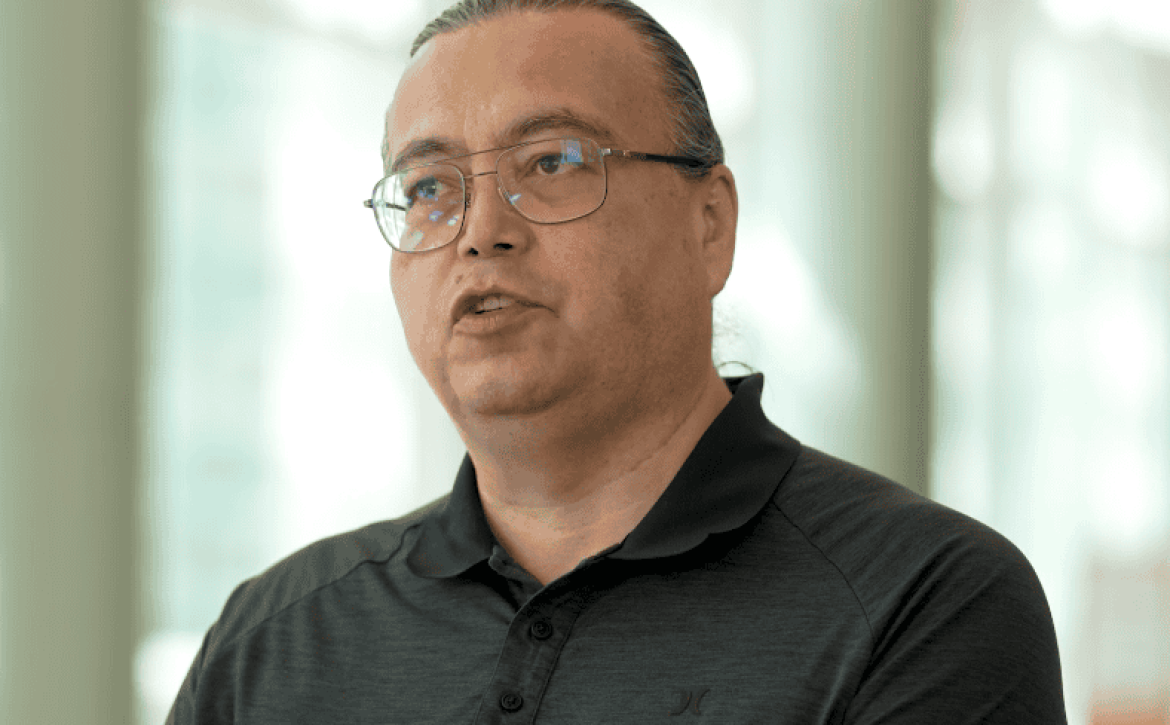
In Memory: Dave Nordquist
In Memory of Dave Nordquist (1968-2025) A Leader in Indigenous-Led Cumulative Effects Assessment
The Indigenous Centre for Cumulative Effects (ICCE) mourns the sudden passing of Dave Nordquist on November 10, 2025. Dave was a visionary leader, dedicated steward, and tireless advocate for Indigenous-led cumulative effects management who leaves an extraordinary legacy across Canada and beyond.
Dave devoted nearly three decades to Adams Lake Indian Band (ALIB), beginning as their first ALIB member Natural Resource Manager in 1997 and most recently serving as Senior Stewardship Officer. A registered professional forester, he created and led programs spanning forestry, fisheries, wildlife, and cultural heritage—always with an unwavering commitment to protecting Secwepemc lands and waters for future generations.
Dave’s leadership work in holistic cumulative effects assessment transformed how many Indigenous communities engage with environmental stewardship. Working with ICCE Technical Advisory Committee member Barry J. Wilson, Dave developed the groundbreaking ALIB Cumulative Effects (CFx) Framework—an 11-year journey of integrating Western science with Traditional Knowledge. This framework provides a dashboard for measuring environmental, social, and cultural impacts across ALIB’s traditional territory, establishing a model for Indigenous-led assessment that respects both Indigenous wisdom and scientific rigor.
From ICCE’s inception, Dave was a steadfast supporter and active participant. He attended the very first ICCE Forum in Calgary in 2019 and remained deeply engaged with ICCE’s mission to advance cumulative effects practice across Canada. He presented at the 2025 Vancouver ICCE conference and the audience was captivated by his stories of ALIB’s cumulative effects journey. A video from this year’s conference, featuring Dave sharing ALIB’s decade-long cumulative effects work, will remain available on the ICCE website as testament to his vision and leadership.
Dave’s influence extended far beyond ALIB and ICCE. He shared his knowledge generously at international forums including the International Association for Impact Assessment conferences in Vancouver (2022) and Bologna, Italy (2025), and at numerous workshops across British Columbia. His leadership philosophy centered on “being” rather than “telling” with great generosity. As an example, he insisted that simulation models ALIB built cover all of Secwepemc’ulecw so every community would benefit from these tools.
Beyond his professional achievements, Dave served as Past President of the National Aboriginal Forestry Association, member of UBC’s First Nation Council of Advisors for the Faculty of Forestry, Board of Directors BC Tomorrow Society and he was a longtime assistant coach with Chase Minor Hockey Association.
Dave led by example with humility, generosity, and an unrelenting dedication to the land and people of Secwepemc’ulecw. His legacy will continue inspiring Indigenous-led stewardship and cumulative effects practice for generations to come.

Webinar: Cumulative Effects and Indigenous Data Governance
In this webinar we learn from Harmony Johnson as we explore how Indigenous data sovereignty and the principles of OCAP (Ownership, Control, Access, and Possession) are being implemented in practical, meaningful ways across British Columbia.
In this session we examined:
- The intersection of Indigenous data governance and cumulative effects monitoring
- Real-world applications through projects, tools, and software
- How BC First Nations are advancing data for governance through sovereign data practices
- Practical frameworks for respectful collaboration and data stewardship
Guest Speakers
- Elder Florence Catholique
- Harmony JohnsonGuest Speaker
Resources
- Contact for Harmony Johnson and her team: info@bcfnrigc.ca
- https://www.bcfndgi.com
- https://fnigc.ca — National Body, contact for information on regional chapters in your area.
We invite you to share this webinar with others.