
photo of sun setting over river and mountain range

Regional Dialogue Sessions

The Indigenous Centre for Cumulative Effects (ICCE) is hosting regional dialogue sessions across Canada as part of a National Needs Assessment for the organization that will better inform its strategic planning, and ultimately the future of the organization. A key objective of the Needs Assessment is to assess the ongoing need in Indigenous communities for awareness and education around cumulative effects. The needs assessment will also help inform the development of new and effective tools, capacity building and supports to address cumulative effects. 

Capacity for these sessions is limited, so please use this forum to express your interest in attending and we will follow-up with you with more details.

Compensation for travel and accommodation expenses will be available for up to one representative per community or organization.

Read More
photo of salmon jumping up river

Atlantic Policy Congress Study Reflects Concerns Over Cumulative Effects

The Atlantic Policy Congress (APC) are fast becoming leaders in addressing cumulative effects in Canada.  Recently, APC hosted its first Cumulative Effects Conference on June 2, 2022 in Dartmouth, Nova Scotia. The conference included a presentation on a study of cumulative effects of human activities and natural processes on Indigenous communities in Atlantic Canada.  The participants were provided some of the findings of a local study on cumulative effects. The study involved a series of key informant interviews, with environmental staff, community leaders and subject-matter experts.  An online survey was also used to gather important data.  The presentation was led by Julia Purcell, Cumulative Effects Project Researcher for APC.
photo of salmon jumping up river
Among the biggest concern for Atlantic First Nations was the salmon fishery. Salmon has been among the most important species for many Mi’gmaq and Maliseet peoples for centuries. One key informant in the study said:

Salmon are an essential indicator of the health of the whole ecosystem. If the habitat quality declines, then we don’t have salmon anymore. Salmon is so central to the culture and the community here that if salmon where to die off we would lose a whole part of our identity.

The study also found that there is concern about certain key human factors including mental health, well-being, and impacts to cultural practices and traditions. Findings also showed concern over environmental costs and impacts to the economy.  One participant shared: 

If climate change and environmental issues keep accelerating, it is going to cost our community millions of dollars for damage control. Nothing is more detrimental than having to move a whole community. It’s not just about the dollars, it’s about losing sacred traditional lands and the fear of having that land disappear.

The study identified that the most concerning stressors for First Nations in Atlantic Canada were land use practices, and concerns over federal and provincial policies respecting the environment. Next steps include the identification of new tools and resources for First Nations to use to assess, manage and mitigate cumulative effects throughout the region.

The APC also plans on developing a new cumulative effects web portal for First Nations to facilitate knowledge sharing and encourage collaboration across the region. 

The APC Cumulative Effects Conference was proudly funded by the Indigenous Centre for Cumulative Effects (ICCE).

Read More
photo of hands embracing a green plant sprout

ICCE Releases Guide to Cumulative Effects Requirements Across Canada

ICCE is pleased to announce the release of its Guide to Cumulative Effects Requirements Across Canada. The Guide, which was developed in collaboration with The Firelight Group, will help Indigenous professionals, community members and other interested parties to understand requirements respecting cumulative effects across Canada. It will be especially helpful for Indigenous communities and practitioners preparing to engage with provincial, territorial, and federal governments when development projects are envisioned or planned in their territory. 

photo of hands embracing a green plant sprout
This Guide is part of an effort by the Indigenous Centre for Cumulative Effects to provide technical support to Indigenous communities through relevant guidance documents.
          ~ Leona Irons, Chair, ICCE Board of Director

Available for download from the ICCE website, the Guide identifies and describes requirements about cumulative effects found in laws, regulations, policies, Treaties, and land use plans in federal, provincial, territorial and Indigenous jurisdictions across Canada.

We hope that this Guide will be a useful and powerful tool to support Indigenous communities in understanding the existing cumulative effects requirements in their territories. We are confident that it will help guide their interactions with governments and project proponents, and assist in developing stronger cumulative effects management frameworks.
          ~ Leea Litzgus, ICCE Executive Director
The Guide includes contextual information, references to where requirements are found as well as how multiple requirements from various sources may work together. This information is organized by jurisdiction, so the users can easily identify what is most relevant to their specific territory or area. Practitioners can utilize as much or as little of this information as needed or can simply access the identified documents through direct links provided in the Guide.

Requirements to address cumulative effects are changing rapidly. This Guide will provide a much-needed practical tool for Indigenous communities across Canada, whether to inform their own efforts to address cumulative effects or to inform conversations with industry and Crown governments.

          ~ Alistair MacDonald, Director, Firelight Group

About the Authors

The Indigenous Centre for Cumulative Effects (ICCE) is an independent Indigenous-led organization that supports Indigenous communities undertaking cumulative effects work. ICCE mission is to create networks, and develop and share knowledge to empower community-based approaches to culturally relevant cumulative effects assessment, monitoring and management to support Indigenous well-being and decision-making. Our primary objective is to help build and enhance the technical and scientific capacity of Indigenous communities, based on the values of First Nations, MÃĐtis and Inuit communities across Canada.  

The Firelight Group is an Indigenous-owned consulting group that works with Indigenous and local communities in Canada and beyond to provide high quality research, policy, planning, mapping, negotiation, and advisory services. Our work focuses on impact assessment, culture, health, socio-economics, ecology, and governance to support the rights and interests of Indigenous communities.

Read More
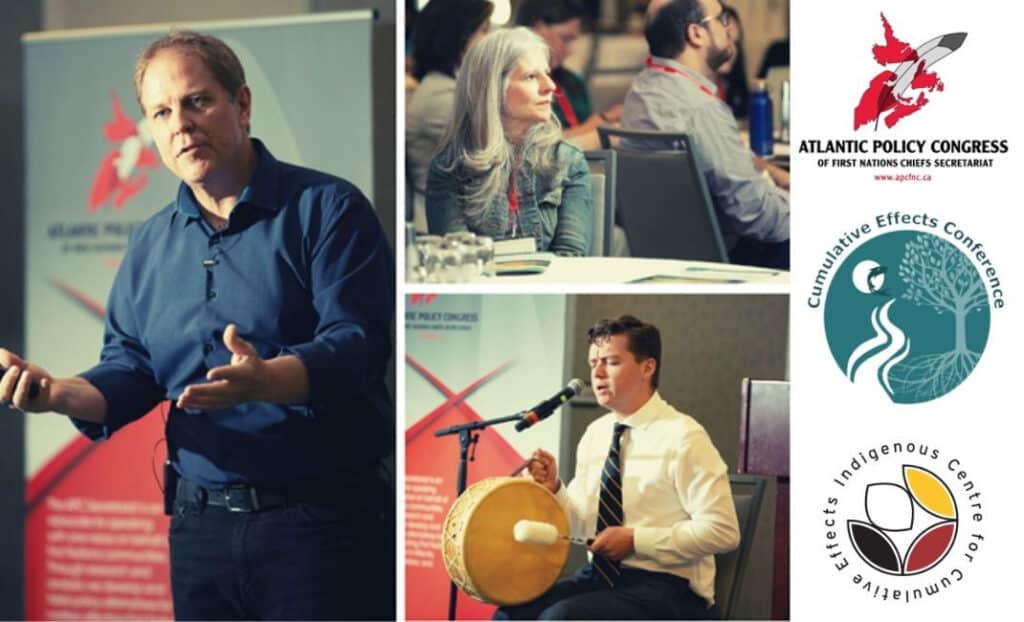
photo montage of participants in the 2022 atlantic policy congress plus logos of host organizations

Atlantic Policy Congress of First Nations Chiefs Secretariat

The Atlantic Policy Congress (APC) of First Nations Chiefs Secretariat is an advocate for speaking with one voice on behalf of First Nations communities in Atlantic Canada, Quebec and the state of Maine in the United States. With the support of First Nation communities in Atlantic Canada, APC follows a relationship vision that concentrates on partnership and cooperation, government to government relationships, dialogue and education, quality of life and self-determination in First Nations Communities. APC works closely with community members and leadership to get direction by providing all information in order that communities can make informed decisions. 

In April 2021, APC was awarded funding from the Indigenous Centre for Cumulative Effects (ICCE) through the Community Funding Program to undertake a project with the goal of building and enhancing the capacity of Atlantic First Nations communities to address cumulative effects issues. Their project will achieve this goal by:

  1. conducting a study on cumulative effects in Atlantic First Nations communities
  2. identifying tools, resources and practical solutions that can be implemented by communities to address cumulative effects issues
  3. holding a conference on cumulative effects along with relevant tools and resources
  4. developing a cumulative effects web portal

To date, APC has completed their research study, identified multiple tools, resources and practical solutions and successfully held their first Cumulative Effects Conference on June 2, 2022. The cumulative effects web portal is in the final stages of development and will be accessible to all 33 of APC’s member communities by the end of July 2022.

The 2022 Cumulative Effects Conference was an opportunity for communities to learn about the cumulative effects project at APC, as well as different tools and resources that are available to help Atlantic First Nations communities address cumulative effects issues. The conference also provided a safe space for sharing stories, knowledge, concerns and ideas related to cumulative effects and provided guests the opportunity to provide feedback on what they wanted to see come out of the project. APC invited a number of excellent speakers to showcase and discuss different tools, resources, studies and projects that can be used to inform future cumulative effects initiatives in Atlantic First Nations communities.

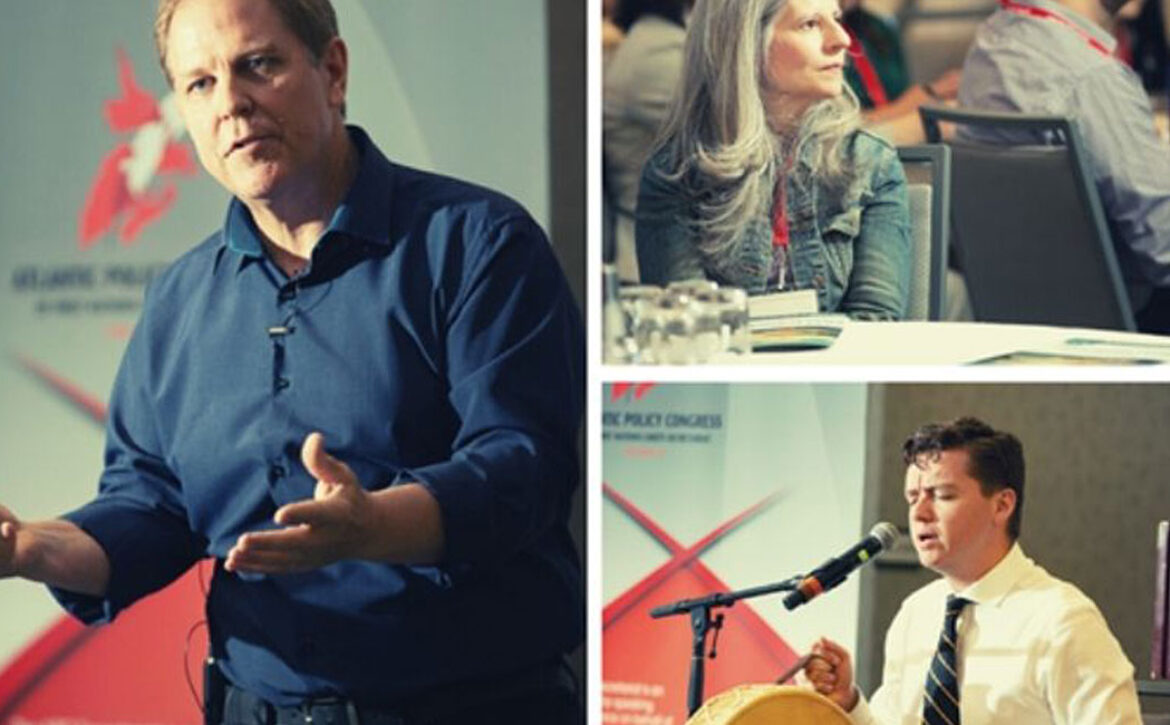
photo montage of participants in the 2022 atlantic policy congress

The keynote address was given by Barry J. Wilson, a cumulative effects specialist at CE Analytic Ltd., who set the tone of the conference and engaged the audience by telling stories, talking about his own cumulative effects work and emphasizing the importance of recognizing that everything is connected.

Chief Andrea Paul of Pictou Landing First Nation presented on the Pictou Landing Well-Being Baseline Study conducted by the community in 2019 in response to the pollution of Boat Harbour by a local pulp and paper mill since 1967 and its subsequent impacts on the well-being of community members.

Michelle Francis-Denny, the Director of the Atlantic Indigenous Economic Development Integrated Research Program at APC, presented about how cumulative effects are impacting economic development in communities across the Atlantic region, particularly when it comes to accessible funding and financial support. 

Barry Stevens, the President of Stevens Solutions & Design Inc. and 3D Wave Design, presented on his 3D interactive mapping tool that can be used to visualize climate change impacts in First Nation communities. Its purpose is to assist communities in observing, planning and adapting to climate change impacts, which are integral to cumulative effects issues.

Stephanie Arnold, a Climate Services Specialist at CLIMAtlantic, presented on a climate change monitoring tool used by First Nations communities in PEI. This tool is called the UPEI Climate Diary, which started out as hard copy booklets and now exists as an online database of environmental-related observations that anyone can upload to.

Ashley Childs, the Senior Director of Environment and Natural Resources at The Confederacy of Mainland Mi’kmaq (CMM), presented on her team’s cumulative effects work with communities in Nova Scotia, which was also financially supported by ICCE through their Community Funding Program.

Shelley Price, a researcher, consultant and university instructor, presented on her research of hydroelectric dams and the cumulative effects they have on marine ecosystems.

Gregory Jeddore, a Forestry Manager with the Miawpukek First Nation Government, shared a video on a spiritual canoe journey that is to take place in the Fall of 2022. From Miawpukek (Conne River, NL) all the way to Terra Nova National Park, the community will travel in handmade birch bark canoes along the rivers their ancestors used to travel.

Lastly, Julia Purcell, the Cumulative Effects Project Researcher at APC, presented on research findings from engaging and speaking with Atlantic First Nations communities about cumulative effects. These findings informed and directed the search for external tools and resources that might benefit communities the most based on their concerns.

Read More
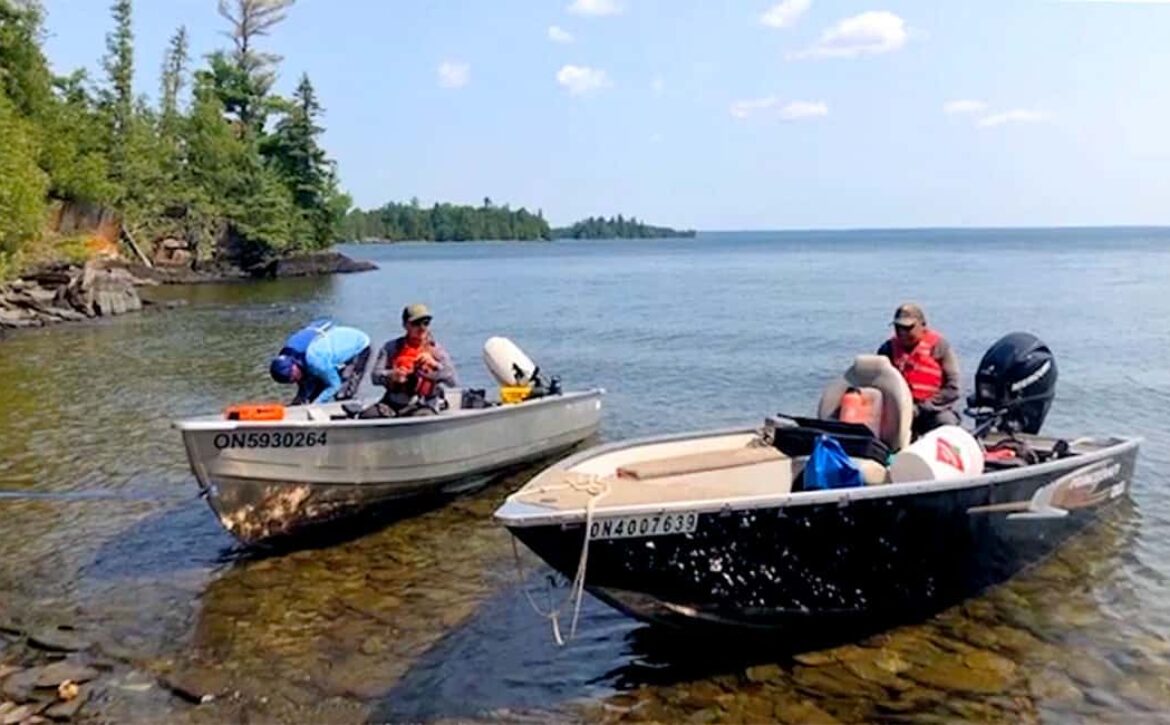
photo of research team in two motorboats

Eagle Lake First Nation Taking Steps to Improve Lake and Anishinaabeg Health

The Eagle Lake First Nation, located about 20 km west of Dryden, Ontario is currently conducting a community-based study to help address cumulative effects on Eagle Lake. Being advised by trusted elders, youth, and knowledge keepers, they established their own Aquatic Monitoring Program for which water sampling on the English River watershed was done with state-of-the-art assessment tools and technology. 

The Eagle Lake watershed and the fishery has been of vital importance for the Anishinaabeg at Migisi Sahgaigan for millennia. The health of the lake and the rivers is intrinsically linked to the health of the people, who signed Treaty 3 in 1873. Since then, their ecosystem has been under threat, including from significant cumulative effects on the English River system by forestry, dam operations, mining, and tourism development. So, the community has taken it upon themselves to do something about it.

The Eagle Lake program involved work done by an innovative intergenerational collaboration of elders and youth. Community events to seek input from community members were instrumental into braiding Indigenous Knowledge and Western Science to establish a community-driven program. The community participants were grateful to be a part of the program and played an active role in the data collection.

O’Hara Adams, the coordinator of the Eagle Lake Aquatic Monitoring Program at the Lands and Resources Department for Eagle Lake First Nation pointed out that “At one of the meetings, we laid the maps out on the table, and had people label the spots on Eagle Lake that we should look into,”

“This really set up and carried the entire program,” said Alison Fraser, Environmental Scientist and Human Health Risk Assessor, EnCompass Environmental Limited. “We heard that community members were really concerned about some of the impacts to the Eagle Lake watershed.” 

The protection of the Farabout Peninsula being key to the community, the study identified the loss of fish spawning habitat, the loss of medicinal and edible plants, the erosion of the shoreline, pollution from mercury contamination, and the changes in water level, temperature, and quality, as the main concerns of the population.

During the study, they collected fish at various locations to identify species, length and weight. All fish were released after study. The water sampling also included pollutant and sediments analysis based on the community-identified concerns.

Currently, the study coordinators are drafting the technical report that will present the data and compare it to federal and provincial guidelines to help identify any concerns. They are also in the process of mapping all of the fish habitat assessment data.

The Eagle Lake First Nation was on hand to present their work on addressing cumulative effects issues during the Indigenous Conference on Cumulative Effects held virtually on March 1, 2022.

Watch more videos from the ICCE 2022 Virtual Conference >

Read More
infographic featuring 5 lessons from saami peoples of finland

Top Five Lessons from the Saami Peoples of Finland

The participants at the 2022 Indigenous Conference on Cumulative Effects held in March were treated to an eye-opening keynote addresse that featured the rich, lived experience of the Saami people of Finland. The presentation offered by Dr. Klemetti NÃĪkkÃĪlÃĪjÃĪrvi spoke to the wide-ranging impacts of cumulative effects on the Indigenous peoples of Finland and it’s impacts to their traditional practice of reindeer herding. 

Dr. NÃĪkkÃĪlÃĪjÃĪrv, from EnontekiÃķ, North Finland tied his presentation to the conference theme of Cumulative Effects: A Health and Well-Being Perspective. His presentation discussed the importance of Saami culture and ways of life, and how they have been impacted by climate change.

“Climate change equals cultural change for the Sammi. Adaptation measures influence the reindeer work model,” said the Postdoctoral Researcher in cultural anthropology at the University of Oulu.”

“Every Saami can choose their own path and way of life. But they must have the possibility to be a Saami and live their traditional Saami way of life,” said Dr. NÃĪkkÃĪlÃĪjÃĪrv. It is increasingly difficult to be a Saami. We are a small people on the global scale, but an important part of the world’s cultural heritage.”

infographic featuring 5 lessons from saami peoples of finland
Here are five key takeaways from Dr. NÃĪkkÃĪlÃĪjÃĪrv’s keynote address to the Indigenous Conference on Cumulative Effects.
  1. The Saami people are the only Indigenous people within the European Union. There are nine difference Saami languages across their territory which is called SÃĄpmi, or “land of the Saami”. Dr. NÃĪkkÃĪlÃĪjÃĪrv described that “all of these languages are alive, but endangered.”
  2. Saami refer to their relationship with the land and the environment as Siiddastallame or “in the nature”. They don’t rely on maps and technology to navigate and travel throughout their territory. They rely on their skills and traditional knowledge accumulated from their elders and years of experience.
  3. Environmental relationships are formed through their activities with the land. They have a close connection to the land and lived sustainably through reindeer herding, fishing, hunting, gathering as practicing Duodji, or traditional SÃĄmi handicrafts. This way of life has protected them from contemporary, lifestyle diseases.
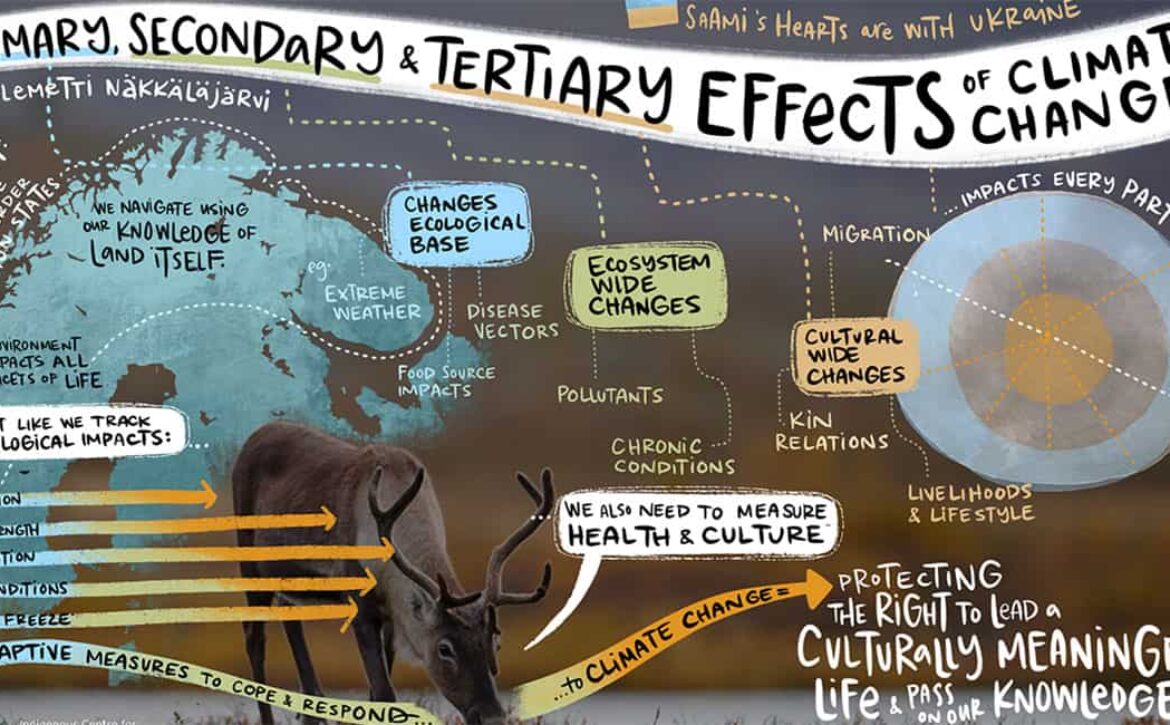
  4. Indigenous peoples are subject to primary, secondary and tertiary impacts of environmental effects. For example: primary impacts (changes to ecology) may including the thawing of permafrost; secondary impacts (ecosystem-wide changes) include the changes to reindeer geography and mortality; and the tertiary impacts (cultural-wide changes) include the impacts to Saami livelihood respecting their reindeer work.
  5. Reindeer work is greatly impacted by the environment and cumulative effects. Much of this work has to be done on packed snow and on the tundra. Herding routes can vary as much as 50 to 200 kilometres in a single day. As a result, Indigenous knowledge and continuous monitoring of the environment is essential to their livelihood. “This knowledge is vital when understanding the effects of climate change,” said Dr. NÃĪkkÃĪlÃĪjÃĪrv.

Read More
infographic summarizing mark podlasly's presentation at icce 2022 conference: indigenous concepts of well-being

Indigenous Concepts of Well-Being: Sustainable Economies, Sustainable Futures

The ICCE 2022 Conference on Cumulative Effects featured a keynote address by Mark Podlasly who spoke about Indigenous Concepts of Well-Being: Sustainable Economies, Sustainable Futures. 

Mr. Podlasly is of the Nlaka’pamux Nation and is the Director of Economic Policy and Initiatives for First Nations Major Projects Coalition.

Podlasly referred to a study commissioned by the BCAFN called Centering First Nations Concepts of Wellbeing: Toward a GDP-Alternative Index in British Columbia. The report cites a number of examples about how Indigenous peoples are working towards a new index to centring well-being. He issued a challenge to the participants.

“If you are on a well-being path, figure out what’s important to you. What is it that you need to protect to ensure that you have a good life?” asked Podlasly. “Is it the environment? Is it your sense of belonging? Is it being Nisga’a, Huron, Algonquin? Figure it out and that will be your well-being start.”

infographic summarizing mark podlasly's presentation at icce 2022 conference: indigenous concepts of well-being

During his keynote address he encouraged delegates to find means to communicate clearly to proponents and investors about what their values and interests are in regard to involvement in  major projects in their territories. For example, Podlasly asserts that Indigenous communities are going to be major players in the goal of being net-zero by the 2050s. 

“There is $100 trillion that is being prepared to invest in the infrastructure needed to fight climate change. We as First Nations are going to be involved on the front lines of these projects as there will be a massive shift away from petroleum-based energy to cleaner sources of energy.” said Podlasky.

“The mines, energy sources, transmission towers are not going to be based in downtown Toronto. They will be based in our territories across Canada. As Indigenous people, we are right at the main table.  The question is how do we approach that?  We can no longer be an afterthought in the development of these projects,” he said.

The First Nations Major Projects Coalition doesn’t promote any specific projects but responds to those First Nations seeking advice and assistance on working on major projects in their territory.

Learn more about the First Nations Major Project Coalition >

Watch more videos from the ICCE 2022 Virtual Conference >

Read More
overhead photo of canada comprising humans

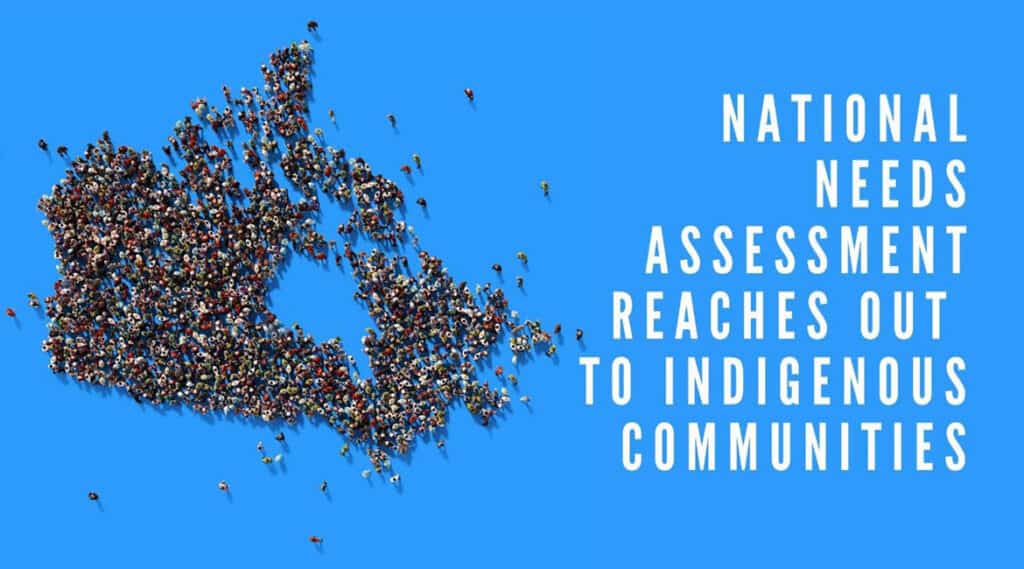
Needs Assessment Reaches Out to Indigenous Communities

Beginning in April 2022, the Indigenous Centre for Cumulative Effects (ICCE) has been hosting community forums as part of a National Needs Assessment for the organization that will better inform its strategic planning, and ultimately the future of the organization. 

A key objective of the Needs Assessment is to assess the ongoing need in Indigenous communities for awareness and education around cumulative effects. The needs assessment will also help inform the development of new and effective tools, capacity building and supports to address cumulative effects.

“There is nothing as important as supporting Indigenous communities in building their knowledge and skills in addressing cumulative effects,” said Leea Litzgus, Executive Director of ICCE.  “The needs assessment is a means of engaging the community in determining how we can best support First Nations, MÃĐtis and Inuit in improving the health and well-being of the land, the water, the air and the people.”

map of canada: national needs assessment reaches out to indigenous communities

Early results of the needs assessment indicate that there is a growing understanding of cumulative effects. Practitioners are committed to learning more about how cumulative effects impact the lives of Indigenous community members.  However, more can be done to develop more effective and practical tools for practitioners.

“We are encouraged by the dialogue so far, and in particular, the apparent need for new tools to assess, mitigate and manage cumulative effects,” said Ms. Litzgus. “I look forward to further outreach and conversations with elders, knowledge holders, youth, and Indigenous leadership across the country.”

The outcome of the needs assessment will help determine the future role of ICCE in supporting these community needs.  A final report will be created by the end of 2022.

There are two distinct phases of the Needs Assessment, both involve substantial input and participation by First Nations, MÃĐtis and Inuit across the country. 

  • Phase 1: Focussed Dialogues – Conversations focused on reaching key subject-matter experts who actively work on cumulative effects.  This includes the Board of Directors, Technical Advisory Committee (TAC) members, and those who have taken part in the ICCE Community Funding Program.
  • Phase 2: Regional Community Dialogues – Conversation focussing on reaching First Nations, MÃĐtis Councils and Inuit communities from coast to coast to coast, including developing new relationships with potential regional partners.

Phase 2 is scheduled to begin in early Fall 2022.  Communications and invitations will be sent to First Nation, Metis and Inuit governments as well as Tribal Councils to participate in regional sessions held across the country.

Read More
photo montage of 2022 ICCE conference speakers

ICCE Conference Focuses on Health and Well-Being Perspective

On March 1 and 2, 2022, the Indigenous Centre for Cumulative Effects (ICCE) hosted its second virtual conference. Close to 200 registrants from First Nations, MÃĐtis and Inuit communities across Canada, came together to better understand cumulative effects and their potential impacts on their people and territories. 

This was the second ICCE virtual conference, dedicated to sharing information, building awareness and new tools to foster an enhanced understanding of cumulative effects. 

ICCE Board of Directors Chair, Leona Irons reflected on the conference theme that explored the links between cumulative effects and the health and well-being of Indigenous communities.

“The theme for this conference is a health and well-being perspective,” said Chairperson Leona Irons from Curve Lake First Nation. “We heard from guest speakers, coast-to-coast, and learned from an Indigenous point of view the links between a healthy environment and a healthy community.”

photo montage of 2022 ICCE conference speakers

The keynote speakers included: 

â€Ē Mark Podlasly, of the Nlaka’pamux Nation speaking about Indigenous Concepts of Well-Being: Sustainable Economies, Sustainable Futures; and

â€Ē Dr. Klemetti NÃĪkkÃĪlÃĪjÃĪrvi, of the Saami Nation speaking about Primary, Secondary and Tertiary Effects of Climate Change to the Culture, Health and Well-Being of Saami in Finland.

“We’ve been blessed with a truly amazing group of speakers,” said Leea Litzgus, Executive Director of ICCE. “The speakers have decades of experience in their fields. They have enriched us with their knowledge, energy and commitment to managing cumulative effects and improving health and well-being for all of us.”

The 2-day conference featured a number of presentations from a diverse group of Indigenous speakers. 

Day 1 sessions focussed on:
â€Ē Restoring Connections Between Lands, Waters and Well-Being;
â€Ē Protecting Our Waters: Eagle Lake First Nation’s Approach to Aquatic Monitoring;
â€Ē Considering Well-Being and Indigenous Knowledge in Impact Assessments; and
â€Ē Supporting Indigenous Communities in Canada Through Interactions with Project Proponents.

Day 2 sessions focussed on:
â€Ē Cumulative Effects on the Different Dimensions of Indigenous Health; and
â€Ē Qwelminte Secwepemc, #TeamSku7pecen Intern Program: Cumulative Effects and Well-Being.

Day 2 also featured an inspiring Indigenous youth panel with youth from the Anishinaabe, Atikamekw and Inuk nations.

Although this conference was virtual, ICCE is planning to return to a pre-pandemic format in 2023.
“Someday soon, we hope that the Indigenous Conference on Cumulative Effects will be an in-person, face-to-face gathering hosted in one of your territories,” said Leea Litzgus. “I miss getting to visit with people, hearing your stories, and sharing our knowledge in the ways of our ancestors.”

Read More
group photo of icce board members and volunteers

Volunteers Drive ICCE Success

 The Indigenous Centre for Cumulative Effects (ICCE) is pleased to honour and celebrate our dedicated, hard-working volunteers, who are key to the continued success of the organization. 

National Volunteer Appreciation Week 2022 — April 25-29 — was an opportunity to recognize the empathy, compassion and generosity of volunteers that create connection between communities and help to build a stronger Nations. 

For ICCE, our volunteers are everything! They are our leaders, our technical advisors, and whose vision, dedication and commitment drive the success of an up-and-coming organization. 

Last week, the ICCE Board of Directors and Technical Advisory Committee (TAC) came together in Wendake for the first, face-to-face meeting since the organization was founded. It was a time to celebrate our dedication to Indigenous communities, our commitment to the environment, as well as better appreciate our humanity, as people and as volunteers. 

Our Board members, and technical advisors are all volunteers. We consist of First Nations, MÃĐtis, Inuit and allies from across Canada, all working towards the cause of identifying, managing and mitigating environmental cumulative effects. 

Our Board volunteers set the direction of ICCE and play a key leadership role in implementing our mandate. They are instrumental in setting our strategic plan, and realizing the vision of ICCE. Our TAC volunteers willingly share their vast environmental knowledge and experience to guide our technical work so that we can better understand and advise on cumulative effects. 

The ICCE management and staff are truly grateful for the ongoing dedication of these incredible volunteers: 

ICCE Board of Directors 

Leona Irons, Chair 

Angie Gillis, Vice-Chair 

Taylor Zeeg, Treasurer 

Mark Cliffe-Phillips 

Dustin Ray Thacker 

Earl Belcourt 

Jeannie Parnell 

Lisa Tssessaze 

Technical Advisory Committee (TAC) 

Paivi Abernethy 

Stephanie Allen 

Ashley Childs

Melanie Daniels 

Dawn Hoogeveen 

Tara Joly 

Clynt King 

Katerina Kwon 

Darlynn Lavallee 

Pepita Elena McKee 

Margot Parkes 

William Ross 

Barry Wilson 

To all the people of ICCE: Chi-miigwetch. Nia:wen. Marsee. Nakummek. 

Read More