close-cropped photo of woman wearing silver broach

ICCE Launches New 3-Year Strategic Plan

The ICCE Strategic Plan 2021 – 2024 was developed based on a series of roundtables from 2018 to 2019, and on discussions held at the Indigenous Forum on Cumulative Effects in February 2020.

This new three-year Strategic Plan was also informed through consultations with the ICCE Board of Directors and ICCE National Office.

Read Highlights from the ICCE Strategic Plan 2021- 2024 >

Read More

ICCE Strategic Plan 2021-24

Vision: Indigenous peoples have the capacity and the ability to assess, monitor and manage the cumulative effects occurring in their lands, waters and communities.
The ICCE mission is to create networks, and develop and share knowledge to empower community-based approaches to culturally relevant cumulative effects assessment, monitoring and management to support Indigenous well-being and decision-making.
close-cropped photo of woman wearing silver broach
photo of scenic waterway at sunset
Strategic Pillar 1: Capacity Building and Training
  • Support the development of tools, protocols, and frameworks for cumulative effects assessment, monitoring and management.
  • Identify gaps and community needs and how the Centre can better equip communities to meaningfully participate in programs, initiatives and specific cumulative effects assessment, management and monitoring processes undertaken by governments and project proponents.

Priorities 2021-2022

  • Community Funding Program
  • Development of guidance materials
  • Analysis of existing capacity and gaps
  • Assessment of needs
  • TAC-generated list of priority guidance materials

Priorities 2022-2023

  • Community Funding Program
  • Development of guidance materials
  • Additional targeted research
  • Development of training tools including webinar

Priorities 2023-2024

  • Community Funding Program
  • On-line training program
  • Possible certification program
Strategic Pillar 2: Networking, Provision of Expert Advice and Information-Sharing
  • Fill existing gaps and build bridges between existing initiatives surrounding cumulative effects.
  • Act as a resource for Indigenous communities to access information, resources, and best practices around cumulative effects assessment, monitoring and management.
  • Raise awareness of ICCE activities and achievements among Indigenous communities, government agencies and project proponents.

Priorities 2021-2022

  • Website
  • National conference
  • National and regional engagement plan
  • Communications, marketing and social media strategy
  • Regional events in targeted areas

Priorities 2022-2023

  • National Conference
  • Regional workshops
  • Mapping tool
  • Peer-to-peer learning

Priorities 2023-2024

  • National Conference
  • Regional workshops
  • Website re-design and update
Strategic Pillar 3: Strengthening of ICCE Governance to Ensure Long-Term Sustainability
  • Put in place a governance structure for ICCE that is inclusive, promotes collaboration and enables a distinction-based approach to ICCE operations.
  • Develop financial partnerships with governmental and non-governmental organizations sharing ICCE’s values and principles to advance ICCE’s objectives.
  • Develop and implement operational and human resources policies and strategies for the National Office.

Priorities 2021-2022

  • Creation and consolidation of committees (TAC, Elders/youth)
  • Governance policies
  • Recruitment strategy for Board and committees

Priorities 2022-2023

  • creation of a Communications Committee
  • Strategy to secure longer-term funding of ICCE
  • Recruitment strategy for young Indigenous professionals

Priorities 2023-2024

  • Strategic planning for the next 3-year period
  • Rebranding
  • Partnerships with academic institutions for potential scholarship program
Corporate Management and Leadership
  • Administrative and financial management
  • Human resources management and recruitment

Priorities 2021-2022

  • Consolidate and expand core team (hiring employees)
  • Administrative management tools (software)
  • Sound financial and corporate management practices to ensure compliance with legal requirements

Priorities 2022-2023

  • Operational procedures manual to support staff, contractors, committees and volunteers
  • Succession plan for leadership positions
  • Sound financial and corporate management practices to ensure compliance with legal requirements

Priorities 2023-2024

  • Logistical considerations for longer term (physical office, regional hubs, etc)
  • Sound financial and corporate management practices to ensure compliance with legal requirements

Read More
photo: p

Western Science Catching Up With Indigenous Worldview: Paivi Abernethy

Indigenous Centre for Cumulative Effects (ICCE) welcomed Dr. Paivi Abernethy, Adjunct Professor, University of Waterloo, to the 2021 Virtual Indigenous Conference on Cumulative Effects held on March 23 and 24, 2021. Ms Abernethy shared that addressing cumulative effects begins with Indigenous worldview and what matters to the community. 

The 2021 virtual conference brought together experts and delegates from around the world to share wise practices and experiences of Indigenous communities experiencing cumulative effects. Key presenters included Dr Deborah McGregor (Anishinaabe, York University), with a welcoming from Chairperson Leona Irons (Anishinaabe, National Aboriginal Lands Management Association).

View the complete video of Paivi Abernethy speaking at the conference web page >

Read More
photo: deborah mcgregor

Keynote Speaker Deborah McGregor Shares the Importance of Indigenous Knowledge

Indigenous Centre for Cumulative Effects (ICCE) welcomed Dr. Deborah McGregor, Anishinaabe, Associate Professor – Osgoode Hall/York University, to the 2021 Virtual Indigenous Conference on Cumulative Effects, held on March 23 and 24, 2021. Dr McGregor speaks about the importance of Indigenous knowledge and its role in support of decision-making at the community-level. 

The 2021 virtual conference brought together experts and delegates from around the world to share wise practices and experiences of Indigenous communities experiencing cumulative effects. Key presenters included Dr Paivi Abernethy (University of Waterloo), with a welcoming from Chairperson Leona Irons (Anishinaabe, National Aboriginal Lands Management Association).

View the complete video of Deborah McGregor speaking at the conference web page >

Read More
news-irons-forum-2021-intro-01

ICCE Chairperson Leona Irons Shares Purpose with Conference Delegates

Indigenous Centre for Cumulative Effects (ICCE) Interim Chair Leona Irons provided the official welcome to the 2021 Virtual Indigenous Conference on Cumulative Effects held on March 23 and 24, 2021. Ms Irons is also the Executive Director for that National Aboriginal Lands Management Association. 

The 2021 virtual conference brought together experts and delegates from around the world to share wise practices and experiences of Indigenous communities experiencing cumulative effects. Key presenters included Dr Deborah McGregor (Anishinaabe, York University), Dr Paivi Abernethy (University of Waterloo), and many others.

View the complete video of Leona Irons speaking at the conference web page >

Read More

2020 Indigenous Forum on Cumulative Effects

Westin Calgary, Calgary AB

DAY 1: Tuesday, February 4, 2020
photo of albina and spike eagle speaker

Opening and Host Nations’ Welcome 
Patrick Kelly, Conference Chair, Senior Associate, First Peoples Group
Alvine and Norton (Spike) Eagle Speaker, Siksika
Blackfoot Confederacy SingersAlvine 

Opening Remarks and Introductions
Leona Irons, ICCE Interim Chair
Dr Kelley Blanchette, Assistant Deputy Minister, Lands and Environmental Management Branch, Indigenous Services Canada
Tiara Jung, Drawing Change

photo of indigenous services canada minister mark miller

Message from the Minister
Hon Marc Miller, Minister of Indigenous Services Canada

photo of dr leroy little bear

Opening Keynote: Big Thinking and Rethinking – Blackfoot Science Metaphysics
Dr Leroy Little Bear, Kainai First Nation
Download Slides >

Mobilization of Pekuakamiulnuatsh Knowledge in the Assessment of Cumulative Effects on Nitassinan
Paul-Antoine Cardin, PhD Candidate, UniversitÃĐ Laval, QuÃĐbec; ICCE Technical and Policy Advisor 
David Cleary, Wildlife Management and Environmental Advisor,
Pekuakamiulnuatsh Takuhikan, Mashteuiatsh
Download Slides >

Adams Lake Indian Band
David Nordquist, Title and Rights, TUS and Special Projects, Adams Lake Indian Band 
Download Slides >

photo of Heather Rasmussen, Policy Advisor Nanavut Impact Review Board

Nunavut Impact Review Board and Qiqitqni
Heather Rasmussen, Policy Advisor Nanavut Impact Review Board
Download Slides >

photo of harvey sykes

McMurray MÃĐtis Freshwater Clam Study Team
Leonard Hansen Sr, Debra Hopkins, Tara Joly and Russell Noseworthy
Download Slides >

photo of becky kosta and christy lin

Smith’s Landing First Nation
Becky Kosta, Lands and Resource Manager, Smith’s Landing First Nation Chief Gary Cheezie, Smith’s Landing First Nation
Download Slides >
View Video: What’s Left? >
View Video: Open Water >

The Confederacy of Mainland Mik’maq
Angeline Gillis, Senior Director, Department of Environment and Natural Resources The Confederacy of Mainland Mi’kmaq
Download Slides >

Closing
Patrick Kelly, Conference Chair, Senior Associate, First Peoples Group
Alvine and Norton (Spike) Eagle Speaker, Siksika
Blackfoot Confederacy Singers

Day 2: Wednesday, February 5, 2020
photo of blackfoot confederacy drummers

Opening and Host Nations’ Welcome 
Patrick Kelly, Conference Chair, Senior Associate, First Peoples Group
Alvine and Norton (Spike) Eagle Speaker, Siksika
Blackfoot Confederacy Singers

Keynote: Everything is Connected: Environment, Economy, Foreign Policy, Sustainability,Human Rights and Leadership in the 21st Century
Sheila Watt-Cloutier, Environmental, Cultural, and Human Rights Advocate

Armchair Discussion on Key Issues Related to Cumulative Effects
Barry Wilson, Systems Ecologist, CE Analytic Ltd
Download Slides >
Dr Suzanne Fluharty, PhD, Community and Ecosystems Yurok Tribe Environmental Program
Download Slides >
Nicole Kapell, Land Use Research Program Coordinator, Ktunaxa Nation Council
Download Slides > 

photo of metlakatia team at ICCE forum

Metlakatla Cumulative Effects Management Program: Stories and Lessons from the Metlakatla Experience | How Indigenous Communities in Canada are Addressing Cumulative Effects
Councillor Robert Nelson, Metlakatia
Katerina Kwon, PhD candidate in the School of Resource and Environmental Management at SFU
Ross Wilson, Executive Director of the Metlakatla Stewardship Society (MSS)
Fanny Nelson, Elder Metlakatla
Download Slides >

photo of lorraine brekke and tim heron

NWT Cumulative Impact Monitoring Program
Lorraine Brekke, A/Manager, NWT Cumulative Impact Monitoring Program
Tim Heron, Northwest Territory Metis Nation
Download Slides > 

Building and Effective Indigenous Centre for Cumulative Effects
Luke Lenny and Marcia Dawson
Download Slides >

Drawing Change: Live Graphic Recording
TiarÃĐ Jung

DAY 3: Thursday, February 6, 2020
photo of albina and spike eagle speaker, and patrick kelly

Opening and Host Nations’ Welcome 
Patrick Kelly, Conference Chair, Senior Associate, First Peoples Group
Alvine and Norton (Spike) Eagle Speaker, Siksika
Blackfoot Confederacy Singers

photo of florence catholique

Closing Keynote
Understanding Cumulative Effects from Indigenous Perspectives
Florence Catholique, Lutsel k’e Dene First Nation
Download Slides >

photo of four indigenous elders

Elders’ Teachings
Florence Catholique, Lutselk’e Dene First Nation
Albert Marshall Sr, Eskasoni
Alvine Eagle Speaker, Siksika
Norton (Spike) Eagle Speaker, Siksika

Closing
Patrick Kelly, Conference Chair, Senior Associate, First Peoples Group
Alvine and Norton (Spike) Eagle Speaker, Siksika
Blackfoot Confederacy Singers

Read More

2021 Virtual Indigenous Conference on Cumulative Effects

DAY 1: Tuesday, March 23, 2021
photo of leea litzgus icce executive director

Welcome
Leea Litzgus, ICCE Executive Director 

photo claudette commanda

Opening Prayer
Elder Claudette Commanda, Algonquin Anishinabe, Kitigan Zibi Anishinabeg First Nation

photo of patrick kelly

Introduction
Patrick Kelly, Conference Chair, Senior Associate, First Peoples Group

photo of leona irons

Introductory Remarks
Leona Irons, ICCE Interim Chair, Executive Director, National Aboriginal Lands Managers Association

photo of leea litzgus icce executive director

ICCE Evolution and Governance: An Introduction to ICCE
Leea Litzgus, ICCE Executive Director

photo of patrick kelly

Introducing the ICCE Board
Patrick Kelly, Conference Chair, Senior Associate, First Peoples Group

The Importance of Traditional Knowledge (TK) and Indigenous Involvement in the Protection of the Environment and Cumulative Effects
Deborah McGregor, Associate Professor and Canada Research Chair in Indigenous Environmental Justice, Osgoode Hall Law Faculty, York University

Break and Musical Presentation
Lonely Boy by Midnight Shine

ICCE Community Funding Program
Paul-Antoine Cardinal, ICCE Technical and Policy Advisor

photo katerina kwon & ross wilson

Expanding the Metlakatla Cumulative Effects Management Program and Data Managment Strategy
Katerina Kwon, PhD Candidate, Conservation Policy Group, School of Resource and Environmental Management, Simon Fraser University
Ross Wilson, Executive Director, Metlakatla Stewardship Society

photo elder harvey sykes

Cumulative Effects in the Lower Athabaska River
Gillian Donald, Founder, Donald Functional & Applied Ecology Inc
Elder Harvey Sykes, Project Lead, McMurray MÃĐtis
Russell Noseworthy
Timothy Clark

photo of patrick kelly

Day 1 Recap
Patrick Kelly, Conference Chair, Senior Associate, First Peoples Group

DAY 2: Wednesday, March 24 2021
photo of patrick kelly

Welcome
Patrick Kelly, Conference Chair, Senior Associate, First Peoples Group

Putting Cumulative Expertise on ICCE: Our Inventory Game Plan
Pamela Perreault, Director, The Firelight Group

photo twin flames

Break and Musical Presentation
Plainsong by Twin Flames

photo paivi abernathy

Cumulative Environmental Impacts, Climate Change and Indigenous Child Health
Paivi Abernethy, TAC Member, ICCE, Research Fellow, Centre for Global Studies, University of Victoria

photo of diana lewis

Understanding Health Impacts from a First Nation Perspective
Diana Lewis, Assistant Professor, Department of Geography and Environment/Indigenous Studies Program, Western University

Break and Musical Presentation
Orange Blossom Special by Asham Stompers

photo of jonas vannar

Competing Land Use in Northern Sweden: The Sami Land is Shrinking and Shrinking Fast
Jonas Vannar, Reindeer Herder, Sirges Reindeer Herder Community, Sweden

photo of tyanna steinwand

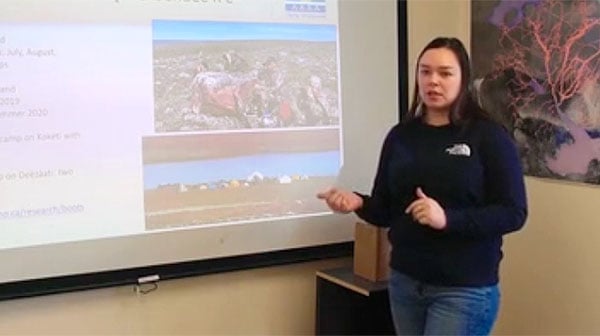
Traditional Knowledge Bathurst Caribou Monitoring Program
Tyanna Steinwand, Manager, Research Operations, Tlicho Government

Q&A Session
Jonas Vannar, Reindeer Herder, Sirges Reindeer Herder Community, Sweden
Tyanna Steinwand, Manager, Research Operations, Tlicho Government

photo of leea litzgus icce executive director

Closing Remarks
Leea Litzgus, ICCE Executive Director

photo claudette commanda

Closing Prayer
Elder Claudette Commanda, Algonquin Anishinabe, Kitigan Zibi Anishinabeg First Nation

Read More
photo of indigenous man fishing

Virtual Indigenous Conference on Cumulative Effects

March 23 to 24, 2021

1 pm to 4 pm EST, Tuesday and Wednesday

Please click here to be directed to the conference website where you can view the detailed program and register.  

Join us for the Indigenous Centre for Cumulative Effects Virtual Conference! The conference will bring together Indigenous communities and organizations as well as national and international thought leaders to explore and discuss strategies to effectively manage the cumulative effects resulting from changes to the environment or to the human well-being from past, present and future development projects and human activities.

Grounded in Indigenous perspectives and worldviews, the conference will highlight community-based experiences and best practices to address the cumulative effects of human activities relative to the environmental, cultural, social and health aspects of communities.

The conference will also provide updates on the activities on the Indigenous Centre for Cumulative Effects since the Indigenous Forum on Cumulative Effects held on Blackfoot territory in February 2020.

Who Should Attend

This conference is primarily for First Nation, MÃĐtis and Inuit communities and Indigenous organizations that undertake, or aspire to undertake, cumulative effects assessment, monitoring and management in their communities. The conference will be of interest to individuals interested in or having responsibilities related to cumulative effects such as land managers, environmental technicians, knowledge holders and land guardians.

For information about the conference, please email Micheline BÃĐlanger. 

Read More
photo of leona irons, board chair of icce

Message from Interim Chair

It is a pleasure to write to you in my role as the interim Chair of the recently established Indigenous Centre for Cumulative Effects (ICCE), to provide you with the latest information about the Centre. I wish to encourage you to engage as a member of ICCE Technical Advisory Committee (TAC).
 
The Indigenous Centre for Cumulative Effects was legally incorporated as a not-for-profit organization in November 2019. This was possible due to a funding commitment from the Government of Canada and followed roundtable discussions with a broad group of Indigenous organizations, individuals, and other partners to help lay the groundwork for the Centre’s foundation. 
 
The Centre’s objective is to help build and enhance the technical and scientific capacity of Indigenous communities for cumulative effects assessment, monitoring and management, based on the values of First Nations, MÃĐtis and Inuit communities to better protect their community’s lands and culture. This will be achieved, in part, by establishing a network of practitioners and potential partners to facilitate the sharing of information and knowledge among communities, developing tools and resources to share and maintain best practices and raising awareness about cumulative effects from Indigenous perspectives.
 
An interim Board of Directors was established with the administrative role of helping to guide the initial activities of the Centre. This included hosting the first Indigenous Forum for Cumulative Effects in February 2020 to introduce the Centre to communities and solicit feedback from participants on the various aspects of ICCE development.
 
We are now establishing an independent Technical Advisory Committee (TAC) which will provide ongoing advice to the Centre on cumulative effects. More information on the roles and responsibilities of the TAC, along with the required qualifications, can be found in the Annex to this letter. Please take the time to reflect on how you or someone else in your community can contribute to the success of ICCE. We would like to receive applications from interested candidates for the Technical Advisory Committee (TAC) before October 2, 2020. Applications should include a CV or letter including a description of relevant experience and expertise, as well as the reasons you are interested in being part of this group. Please send your expression of interest as well as any questions you may have to our Executive Director Leea Litzgus. 

Please note that a separate letter is being sent to recruit Directors for the ICCE Board. Information on the Board of Directors is also provided in the Annex, so that you can see the differences between the two groups. It is important to note that while ICCE Board members must be Indigenous, this is not the case for the Technical Advisory Committee. The TAC may include a mix of Indigenous and non-Indigenous people who will be selected based on their expertise.
 
ICCE represents a great opportunity for Indigenous peoples to develop capacity and tools, and share information in the important area of cumulative effects. The Centre will support Indigenous people in our continual quest to build healthy and sustainable communities consistent with Indigenous culture and values. For more information on ICCE and on the February Indigenous Forum, I invite you to consult our website at www.icce-caec.ca, which is currently under construction and will be increasingly populated with information in the coming weeks.

Read More

2020 Indigenous Forum on Cumulative Effects

February 3 to 6, 2020
Westin Calgary, Calgary AB

Building a new, Indigenous organization that will support the technical and scientific capacity of communities to undertake cumulative effects work.

Join the Conversation

Hosted by the Indigenous Centre for Cumulative Effects, the inaugural Indigenous Forum on Cumulative Effects brings together Indigenous communities, thought leaders and relevant Indigenous organizations to explore and discuss strategies to effectively manage the cumulative effects resulting from development and other activities, such as climate change, on their lands, resources and communities.

Grounded in Indigenous perspectives and worldviews, the Forum will highlight community-based experiences and best practices to address the cumulative impacts of human activities to the environmental, cultural, social and health of communities. 


In this way, the Forum will provide an innovative and engaging opportunity for Indigenous communities to network with each other as well as with experts and practitioners in a unique and interactive format. The Forum will also provide an opportunity for attendees to learn more about the newly-formed Indigenous Centre for Cumulative Effects and discuss how it can best serve the needs of Indigenous communities. 

This event is primarily for First Nation, MÃĐtis and Inuit communities and relevant Indigenous organizations who undertake, or aspire to undertake cumulative effects assessment, monitoring and management in their communities. Two delegates designated from the community or organization will be supported for travel to attend the Forum.

About the Centre

Indigenous peoples have a profound connection to their environment and are best positioned to understand how cumulative effects from development and other activities impact their lands, resources and communities over time. However, with some exceptions, Indigenous participation in the cumulative effects assessment, monitoring and management is often limited by the available capacity in communities. Many communities have expressed a desire to develop this capacity in order to effectively and sustainably manage their lands and waters.

The Indigenous Centre for Cumulative Effects will help to build and enhance the capacity of Indigenous communities for cumulative effects assessment, monitoring and management, based on the values of First Nations, MÃĐtis and Inuit communities.  In this spirit, the Centre will help to facilitate networking and the sharing of knowledge and experience among communities as well as assist in the development of necessary tools for communities to undertake projects related to cumulative effects assessment, monitoring and management. The Centre is being developed in collaboration with Indigenous partners and will operate as a not-for-profit organization.

What Are Cumulative Effects?

The Canadian Council of Ministers on the Environment describes cumulative effects as a change in the environment caused by multiple interactions among human activities and natural processes over time. Cumulative effects can impact a broad array of resources and ecosystem components. Identifying and implementing measures to control, minimize or prevent the adverse consequences of cumulative effects will lead to sound and adaptive environmental management practices.

The goal of cumulative effects assessment and management is to preserve ecological integrity and sustain natural ecological processes for the benefit of future generations.

Download the Forum Program >

Read More